
2026-07-27
Convert Image to SVG for Laser Cutting: xTool, Glowforge & LightBurn Guide
Laser cutting machines require single-line vector strokes or clean closed paths. Here is how to vectorize raster graphics into cut-ready SVG files for laser machines.
Written and reviewed by
Shahab Uddin, Founder & Product Lead. Shahab built JPEGtoSVG.com and reviews the site's conversion guides, presets, and SVG quality advice.
Quick Answer
- Laser cutters read SVGs as vector line instructions (strokes for cutting/scoring, fills for engraving).
- To convert an image for laser cutting, select 'Cricut' or 'Logo' preset, remove background shapes, and verify all vector paths are closed.
- Export as clean SVG and import into LightBurn, Glowforge App, or xTool Creative Space without scaling distortion.
Table of contents
Laser cutters like Glowforge, xTool, OMTech, and Thunder Laser rely on SVG vector files to guide the laser beam along precise cut lines. Unlike raster images that pixelate when resized, SVG cut paths ensure your machine cuts exactly where intended.
Converting a JPEG or PNG image into a cut-ready SVG requires cleaning up unnecessary background pixels, closing open path loops, and reducing redundant nodes so your laser cutter operates smoothly.
Key requirements for laser cutting SVG files
Before sending an SVG to LightBurn or Glowforge, check these essential vector properties:
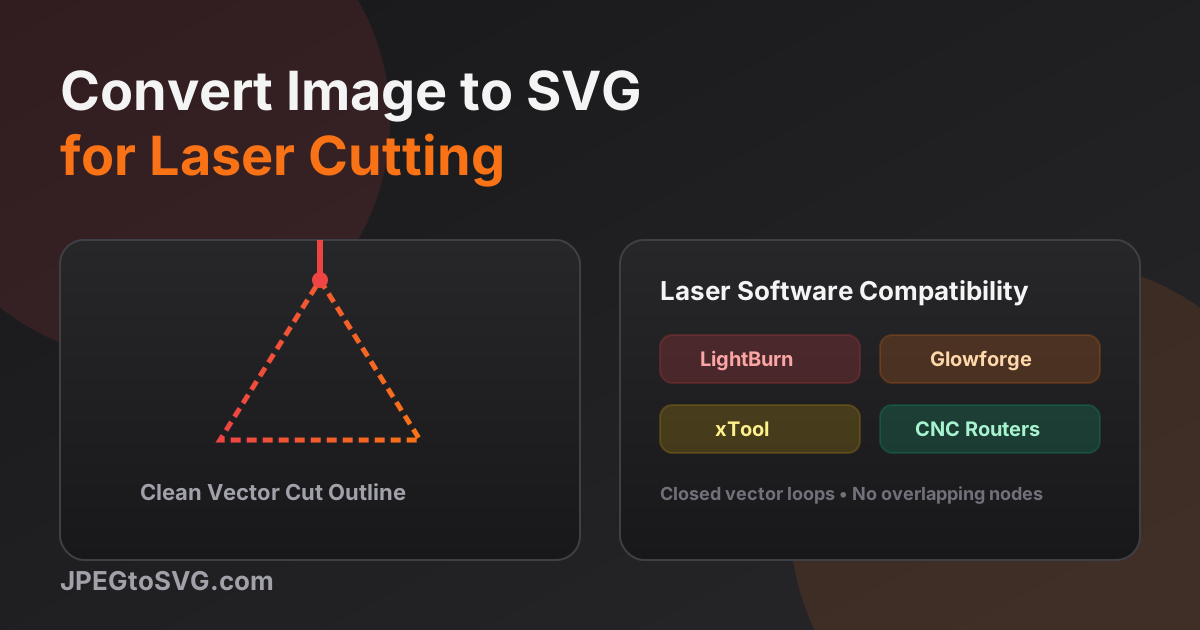
Closed vector loops: Outlines must form continuous closed loops so the laser knows where the cut starts and ends.
Stroke vs. Fill: Assign red or black stroke lines for cutting/scoring, and solid fills for engraving regions.
Node density: Excessive anchor points cause the laser head to stutter; use path simplification to smooth curves.
Tips and best practices
- Group cut vectors by color so your laser software can automatically assign speed and power layers.
- Remove double overlapping lines to prevent the laser from cutting the same path twice.
FAQ
What SVG stroke width should I use for Glowforge?
Glowforge reads vector paths regardless of stroke width, but keeping strokes at 0.001 in (0.072 pt) makes cut lines clear in vector editors.